Alone at the Top: How Leadership Strengths Quietly Become Sources of Isolation
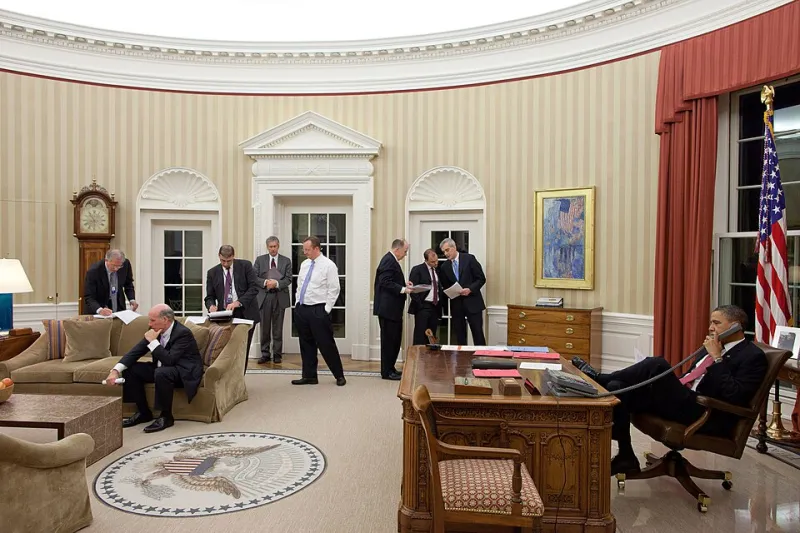
Photo: The White House from Washington, DC, Public domain, via Wikimedia Commons
There is a particular silence that settles in around senior leaders. It is not the comfortable quiet of confidence. It is the muted, disorienting stillness of a room that empties when you walk in—where conversations shift, where honesty becomes filtered, and where the people you depend on most begin to tell you what they believe you want to hear rather than what you need to know.
This is the loneliness of leadership. And for many executives across American organizations, it is one of the least discussed and most consequential challenges they face.
The Paradox of Competence
Consider the qualities that typically accelerate a leader's rise through an organization: decisiveness under pressure, the ability to operate independently, a talent for seeing the strategic picture when others are lost in the details, and an emotional steadiness that projects calm in the face of uncertainty. These are not incidental traits. They are the core competencies that organizations identify, reward, and promote.
Yet each of these strengths carries a hidden cost.
Decisiveness, practiced without sufficient input, can signal to a team that their perspective is neither sought nor particularly valued. Self-reliance, taken to its natural extreme, closes the door to vulnerability—and vulnerability, as uncomfortable as it may feel in a boardroom context, is the very foundation of authentic human connection. Strategic thinking, when it operates at a level of abstraction far removed from the day-to-day concerns of a team, can make a leader feel not powerful but distant—more symbol than person.
The result is a kind of unintentional isolation. The leader did not choose it. The team did not engineer it. It emerged organically from the very dynamics that define organizational hierarchy.
What Isolation Actually Costs
The consequences of leadership isolation extend well beyond the personal discomfort of feeling alone. Research on organizational behavior consistently finds that isolated leaders make poorer decisions—not because they lack intelligence, but because they lack access to the unfiltered ground-level information that only flows freely through relationships of genuine trust.
When team members sense that a leader is operating at an emotional remove, they self-censor. They smooth over problems. They present polished narratives rather than honest assessments. The leader, in turn, makes decisions based on an increasingly curated version of reality—one that may look coherent on a dashboard but bears little resemblance to what is actually happening in the organization.
Beyond decision quality, there is the matter of psychological sustainability. Executives who describe a persistent sense of isolation report higher rates of burnout, diminished motivation, and a creeping sense that their work has become transactional rather than meaningful. In a professional culture that rarely creates space for leaders to acknowledge these feelings, the problem compounds quietly over years.
Why Leaders Resist Addressing It
For many senior executives, acknowledging loneliness feels professionally dangerous. There is a deeply ingrained cultural narrative in American business life that equates leadership with self-sufficiency. Admitting that you feel disconnected from your team or your peers can feel like confessing a weakness—one that might call your fitness for the role into question.
This resistance is understandable. It is also precisely the thing that keeps isolation entrenched.
The irony is that the leaders most respected by their teams are rarely those who project an impenetrable exterior. They are the ones who demonstrate a capacity for honest engagement—who ask real questions, listen without an agenda, and show a willingness to be changed by what they hear.
Practical Strategies for Rebuilding Connection
The path out of leadership isolation does not require dismantling authority or abandoning the strategic perspective that makes a senior leader effective. It requires a deliberate and disciplined investment in relational depth. Several approaches are worth considering.
Create structured space for candid dialogue. Many leaders assume that an open-door policy is sufficient. It rarely is. People do not walk through open doors uninvited, particularly when organizational power dynamics are at play. Scheduled one-on-one conversations—conducted with genuine curiosity rather than performance review energy—signal that honest input is not merely tolerated but actively sought.
Cultivate peer relationships outside the chain of command. Executive peer groups, whether through formal coaching programs, professional associations, or informal networks of leaders at comparable career stages, provide something that internal relationships cannot: a space where rank is irrelevant and candor is possible. These relationships are among the most underutilized resources available to senior leaders.
Engage a professional executive coach. The coaching relationship offers a confidential environment in which a leader can examine blind spots, process difficult experiences, and develop strategies for more authentic engagement—without the political complexity that attaches to any conversation held within the organization itself. For many executives, it is the only relationship in their professional lives that is entirely free from hierarchy.
Practice deliberate visibility in human terms. Showing up at team events, acknowledging personal milestones, expressing genuine appreciation for contributions that often go unnoticed—these are not soft gestures. They are the relational infrastructure that determines whether a leader's authority is experienced as presence or pressure.
Authority and Authenticity Are Not Opposites
Perhaps the most important reframe available to isolated leaders is this: connection does not compromise authority. In fact, the evidence points in precisely the opposite direction. Leaders who are perceived as genuinely present—who demonstrate that they see and value the people around them—tend to command deeper loyalty, more honest input, and more resilient organizational cultures.
The fear that vulnerability will be read as weakness is almost always greater than the reality. Most teams are not looking for a leader who has no needs. They are looking for one who is honest about them.
Leadership at the executive level is, by its nature, a solitary vocation in certain respects. Final decisions rest with you. Ultimate accountability rests with you. But the journey toward those decisions need not be taken alone. The most effective leaders are those who understand that their greatest strength is not their independence—it is their capacity to draw the best from the people around them.
That capacity is only possible when genuine connection exists. And genuine connection, like any meaningful professional skill, can be developed with intention, practice, and the right support.