Strength in Listening: How the Most Effective Executives Use Feedback as a Decision-Making Superpower
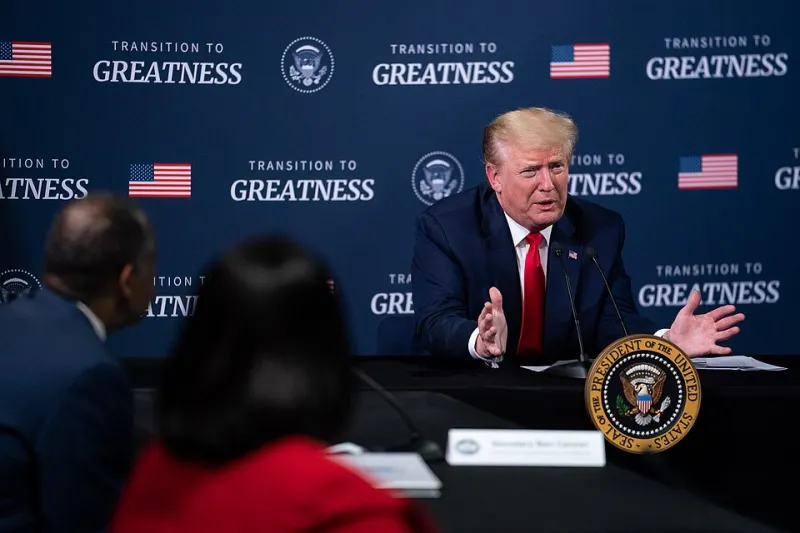
Photo: The White House from Washington, DC, Public domain, via Wikimedia Commons
There is a persistent myth in American corporate culture that the most capable leaders already have the answers. They project certainty. They walk into rooms with conviction. They make calls swiftly and without visible hesitation. This image of the self-sufficient executive is pervasive—and it is quietly undermining the quality of decisions being made at the highest levels of organizations every day.
The truth is more nuanced, and considerably more empowering: leaders who deliberately and consistently seek feedback from their teams, peers, and mentors do not reveal weakness. They demonstrate a sophisticated form of intelligence that separates good executives from truly exceptional ones.
The Invisible Wall Between Leaders and Honest Input
Before examining what effective feedback-seeking looks like in practice, it is worth understanding why so many capable leaders avoid it in the first place.
Psychological research on leadership behavior consistently identifies several barriers. The first is what organizational psychologists call the "competence signaling trap"—the belief that asking questions or soliciting opinions will cause others to question one's qualifications. For executives who have spent years building authority through demonstrated expertise, this fear can be particularly acute.
The second barrier is subtler: the higher a leader rises, the less candid feedback they naturally receive. Direct reports are often reluctant to challenge someone who controls their career trajectory. Peers may be competing for the same resources or recognition. Even well-intentioned mentors can default to encouragement over honest critique. Over time, leaders can find themselves operating within an information vacuum they did not create and may not even recognize.
A third factor is time pressure. In fast-paced executive environments, pausing to gather perspectives can feel like a luxury. The urgency of daily operations can make consultation seem inefficient, even when the stakes of a decision are significant.
Each of these barriers is understandable. None of them, however, justifies the cost of operating without adequate input.
What Research and Real-World Experience Reveal
Studies on organizational decision-making consistently demonstrate that diverse input improves outcome quality. A 2019 study published in the Journal of Applied Psychology found that leaders who regularly solicited upward feedback showed measurably greater improvement in performance ratings over time compared to those who did not. More telling, the teams of feedback-seeking leaders reported higher levels of psychological safety—the foundational condition for innovation, honest communication, and sustained performance.
Consider the example of Satya Nadella's early tenure at Microsoft. When he assumed the role of CEO in 2014, one of his most deliberate cultural shifts was moving the organization away from a "know-it-all" culture toward a "learn-it-all" culture. This was not merely an internal messaging exercise. It reflected a genuine operational philosophy in which leaders at all levels were expected to seek input, acknowledge uncertainty, and treat feedback as a strategic resource rather than a social inconvenience. The company's subsequent transformation—both culturally and financially—is well documented.
Building a Feedback-Rich Culture Starts With the Leader
An executive who wants to create an environment where honest input flows freely must first model the behavior themselves. This requires both structural changes and a genuine shift in personal orientation.
Make feedback requests specific. Vague invitations such as "let me know if you have any thoughts" rarely generate useful responses. Instead, leaders who ask targeted questions—"What is the one thing about this strategy that concerns you most?" or "Where do you think my assumptions might be off?"—signal that they are genuinely seeking substantive input, not reassurance.
Create formal channels alongside informal ones. Regular one-on-one conversations, anonymous pulse surveys, and structured after-action reviews all serve different functions. A combination of approaches ensures that feedback is not solely dependent on the comfort level of individual team members.
Respond visibly to the input you receive. Nothing extinguishes a feedback culture faster than the perception that shared perspectives disappear into a void. When leaders acknowledge what they heard, explain how it influenced their thinking, and—where appropriate—adjust their decisions accordingly, they demonstrate that the exercise of providing input is genuinely worthwhile.
Seek external perspectives as well. Peers within the organization are valuable, but they share the same internal context, assumptions, and blind spots. Engaging an executive coach, a board advisor, or a trusted mentor outside the organization introduces perspectives that internal sources simply cannot provide.
The Decision-Making Advantage
When feedback is treated as a strategic input rather than a social courtesy, the quality of decisions improves in several concrete ways.
First, it reduces the risk of confirmation bias—the tendency to favor information that supports existing beliefs. Leaders who actively seek dissenting views are more likely to identify flaws in their reasoning before those flaws become costly mistakes.
Second, it accelerates organizational learning. When team members observe that their input influences outcomes, they become more invested in the success of those outcomes. This translates directly into greater accountability, more proactive problem identification, and stronger execution.
Third, it builds relational trust. Employees who feel genuinely heard by their leaders are more likely to remain engaged, more willing to take initiative, and more likely to raise concerns before they become crises. In a labor market where retaining top talent remains a significant challenge for US organizations, this dynamic carries real strategic value.
Reframing What Strength Looks Like
The leaders who will define the next generation of American business are not those who project an illusion of omniscience. They are those who have the self-awareness to recognize the limits of their own perspective, the confidence to invite challenge, and the discipline to act on what they learn.
Seeking feedback is not an admission of inadequacy. It is an exercise of judgment—a recognition that better information produces better decisions, and that the most valuable information often resides in the people and relationships already surrounding you.
At Gary Williams Coaching, the executives we work with consistently discover that the act of asking—genuinely, specifically, and with follow-through—is among the most powerful tools available to a leader at any level. The question is not whether you can afford to seek input. It is whether you can afford not to.