When Standing Out Wears You Down: The Hidden Cost of High-Visibility Leadership

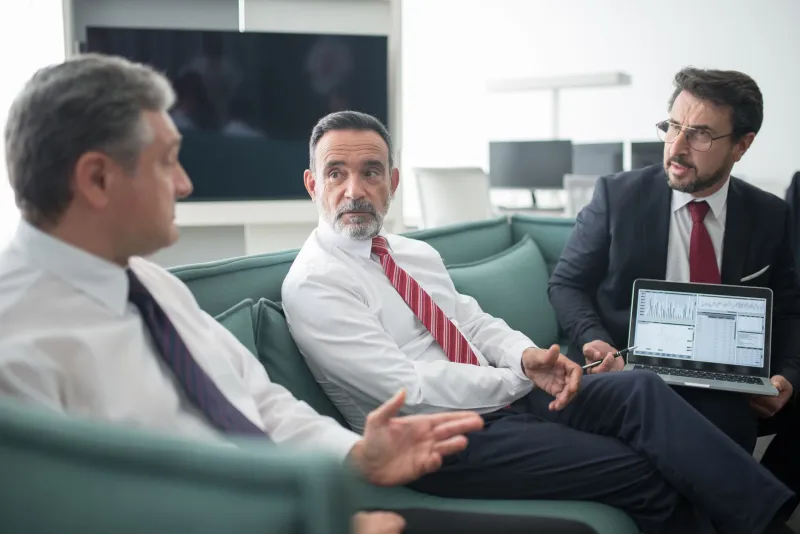
Photo by Photo by Aleksandrs Karevs on Unsplash on Unsplash
There is a particular kind of exhaustion that high-performing leaders rarely discuss openly. It is not the fatigue that follows a demanding quarter or a challenging restructuring. It is something subtler and more corrosive — the weariness that accumulates when a leader has spent months, or even years, performing visibility rather than inhabiting it.
For executives who have built their reputations on presence, influence, and the ability to energize a room, this distinction can feel uncomfortable to examine. After all, visibility is frequently cited as a prerequisite for leadership effectiveness. Research consistently shows that leaders who communicate actively, engage their teams, and maintain a recognizable organizational presence tend to produce stronger results. The problem is not visibility itself. The problem emerges when visibility becomes a role rather than an expression — when showing up starts to feel more like staging a performance than genuine engagement.
The Seduction of Presence
American professional culture has long celebrated the leader who fills space. The executive who commands a boardroom, who delivers a compelling all-hands address, who seems equally at ease with the C-suite and the frontline — this archetype carries enormous social capital. Organizations reward it. Promotions follow it. Reputations are built on it.
For leaders who possess a natural talent for presence, early career success often reinforces the belief that visibility is an unambiguous asset. And for a time, it is. High visibility creates access, accelerates trust-building, and positions leaders to advocate effectively for their teams and initiatives.
Yet the very behaviors that generate this momentum can gradually become obligations. What began as an authentic expression of personality — the energy, the accessibility, the consistent communication — starts to feel mandatory. The leader who once engaged spontaneously now manages a carefully curated calendar of appearances. The candid hallway conversation becomes a scheduled touchpoint. The genuine enthusiasm that once animated team meetings is now summoned deliberately, regardless of what is actually happening internally.
This is the point at which visibility begins to work against the leader.
The Performance Tax
Psychologists who study occupational identity refer to a phenomenon called surface acting — the process of displaying emotions that do not reflect one's actual internal state. Flight attendants, customer service professionals, and others in high-interaction roles are frequently studied in this context. What is less often acknowledged is how prevalent surface acting becomes among senior leaders who feel pressure to project confidence, optimism, and engagement at all times.
The psychological cost of sustained surface acting is well-documented: elevated stress, diminished job satisfaction, and a gradual erosion of the sense of authentic self. For leaders, these effects are compounded by the stakes involved. An executive managing a team of forty cannot simply disengage from visibility demands the way an individual contributor might. Their presence, or the quality of it, has organizational consequences.
Over time, the gap between the public-facing leader and the private individual can widen to the point where even close colleagues and direct reports sense the disconnection — even if they cannot articulate it. Teams are remarkably perceptive. They notice when enthusiasm feels scripted, when accessibility feels transactional, and when the leader who is technically present is not genuinely there.
Authenticity as a Structural Problem
It would be convenient to frame this as a personal failing — a matter of insufficient self-awareness or poor boundary-setting. In reality, many organizations structurally incentivize performative visibility in ways that make authenticity genuinely difficult to sustain.
Leaders are expected to communicate consistently upward and downward, to model culture, to remain accessible, and to project stability even during periods of genuine uncertainty. These expectations are not unreasonable in isolation. But when they accumulate without corresponding support structures — without space for leaders to process, reflect, or simply be uncertain — they create conditions in which performance becomes the only viable strategy.
The executive who admits fatigue risks being perceived as disengaged. The one who expresses genuine doubt may be seen as lacking conviction. And so the performance continues, often long past the point at which it serves anyone well.
Toward Sustainable Visibility
The goal is not to retreat from visibility. Leaders who disappear from organizational life create different and equally serious problems — disoriented teams, communication vacuums, and cultures that drift without direction. The objective is to develop a form of visibility that is durable because it is genuine.
Several principles tend to support this kind of sustainable presence.
Distinguish between presence and performance. Genuine visibility is grounded in actual engagement — listening, asking real questions, responding to what is actually being said rather than delivering a rehearsed message. Leaders who prioritize quality of engagement over quantity of appearances often find that their influence deepens rather than diminishes.
Create protected space for internal recovery. High-visibility leadership demands significant emotional and cognitive resources. Treating recovery not as a luxury but as an operational necessity — building it into schedules with the same discipline applied to strategic priorities — is essential to longevity. This may mean fewer appearances delivered with greater quality, rather than omnipresence that dilutes impact.
Allow selective transparency about the demands of leadership. This does not mean sharing every frustration with direct reports or performing vulnerability for its own sake. It means that leaders who occasionally acknowledge the weight of their responsibilities, in appropriate contexts, tend to build more durable trust than those who project invulnerability at all times. Humanity is not a liability in leadership; the pretense of its absence is.
Audit the visibility obligations that actually matter. Not all visibility creates equal value. Some organizational rituals exist because they have always existed, not because they serve a meaningful purpose. Leaders willing to evaluate honestly which forms of engagement genuinely advance their teams and which are simply institutional habit often find meaningful room to recalibrate.
The Long View
Leaders who sustain genuine influence over long careers are rarely those who were most visibly dominant at any single moment. They are the ones whose presence retained its meaning because it remained connected to something real — a consistent set of values, an authentic interest in the people around them, and a willingness to be human in the role rather than simply effective in it.
Visibility is a legitimate and valuable leadership asset. But like any asset, it requires thoughtful management. When presence becomes performance, it begins to cost more than it returns — in energy, in authenticity, and ultimately in the quality of connection that makes leadership worth doing in the first place.
The most enduring leaders are not those who are always seen. They are those whose presence, when felt, means something.